Is polyvinyl alcohol (PVA / PVOH) safe in food and medicines?
Polyvinyl alcohol (PVA or PVOH) is a synthetic, water‑soluble, biodegradable polymer widely used in the food and pharmaceutical industries. When used as intended — as a thin coating, binder for pills and vitamins, glazing, or in water‑soluble films and unit‑dose sachets — food‑grade PVA is considered safe by major regulators for those uses.
What is PVA?
- Full name: Polyvinyl alcohol (PVA or PVOH)
- Form: Odorless, tasteless white or cream granular powder for food use
- Key properties: Water‑soluble, film‑forming, biodegradable; can be engineered to dissolve at specific temperatures
- Primary functions: Moisture and oxygen barrier; edible films; water‑soluble pouches; capsule/tablet coatings, binder for tablets, coating for chocolate and other confectionary items, thickener for liquid food items
Common applications
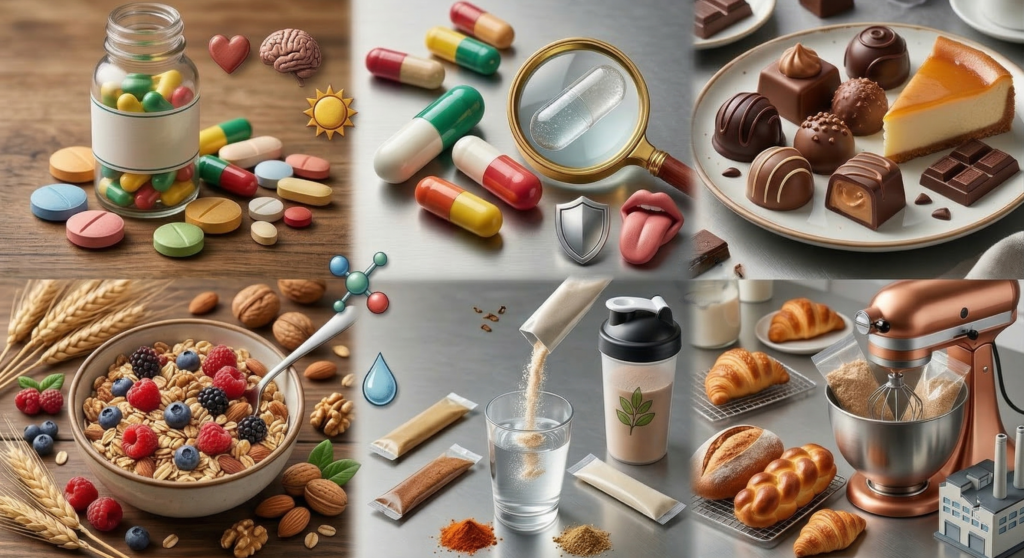
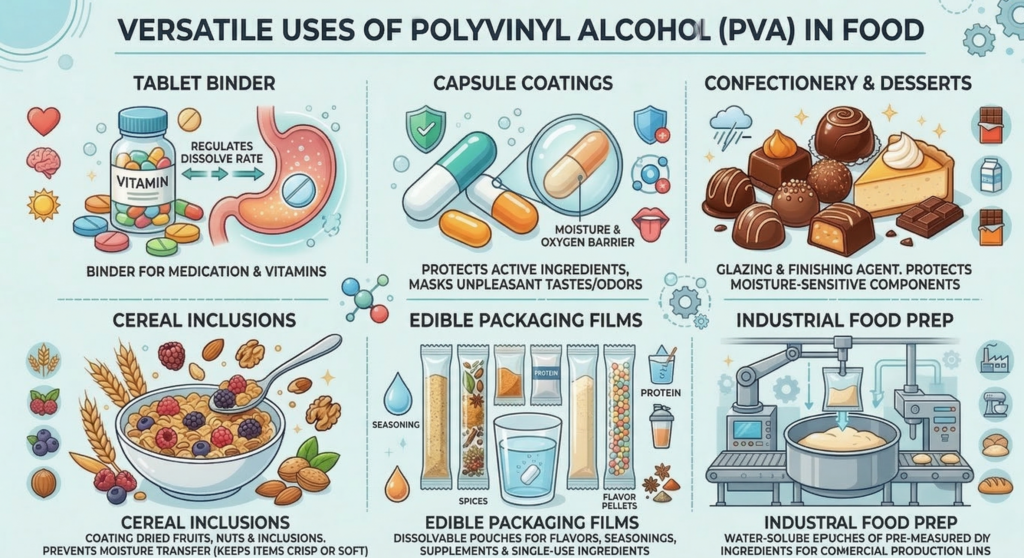
- Tablet: Binder for pills and vitamins. Regulates the dissolve rate
- Capsule coatings: Protect active ingredients from moisture and oxygen; mask tastes/odors
- Confectionery & desserts: Glazing/finishing to protect moisture‑sensitive components
- Cereal inclusions: Coating dried fruits, nuts to prevent moisture transfer
- Edible packaging & sachets: Dissolvable pouches for powdered flavors, seasonings, protein packets
- Industrial food prep: Water‑soluble pouches of pre‑measured dry ingredients
- Glazing & thickening: Surface finish and texture in processed foods
Regulatory and safety status
The U.S. Food and Drug Administration (FDA) considers food‑grade PVA to be Generally Recognized as Safe (GRAS) for its intended uses as a coating or edible film when used according to good manufacturing practices.
Frequently asked questions
- Will PVA build up in my body?
- No evidence shows accumulation from normal dietary exposure. PVA is poorly absorbed and is eliminated.
- Is PVA the same as microplastics?
- No, PVA is a synthetic polymer, but many grades are water‑soluble and biodegradable. Its environmental behavior differs from non‑soluble plastics.
- Can PVA cause allergic reactions?
- Allergic reactions from food‑grade PVA coatings are not commonly reported. Consult a healthcare provider for individual concerns.
Bottom line
When used as intended — as a coating, edible film, binder, thickener or water‑soluble pouch — food‑grade PVA is considered safe by regulators and offers useful functional benefits (moisture/oxygen protection, controlled dissolution).